Assigned in class Week 5. You have 2 weeks to complete the comment and post your response on the blog and Webliography. Due Week 7, by the beginning of class.
An
iconic photograph is a photograph
that becomes well-known and recognized in popular culture, so much so that it
comes to stand in for the event that it captures. For instance, Joe
Rosenthal's Raising the Flag on Iwo Jima
came to stand in for American victory in WWII:
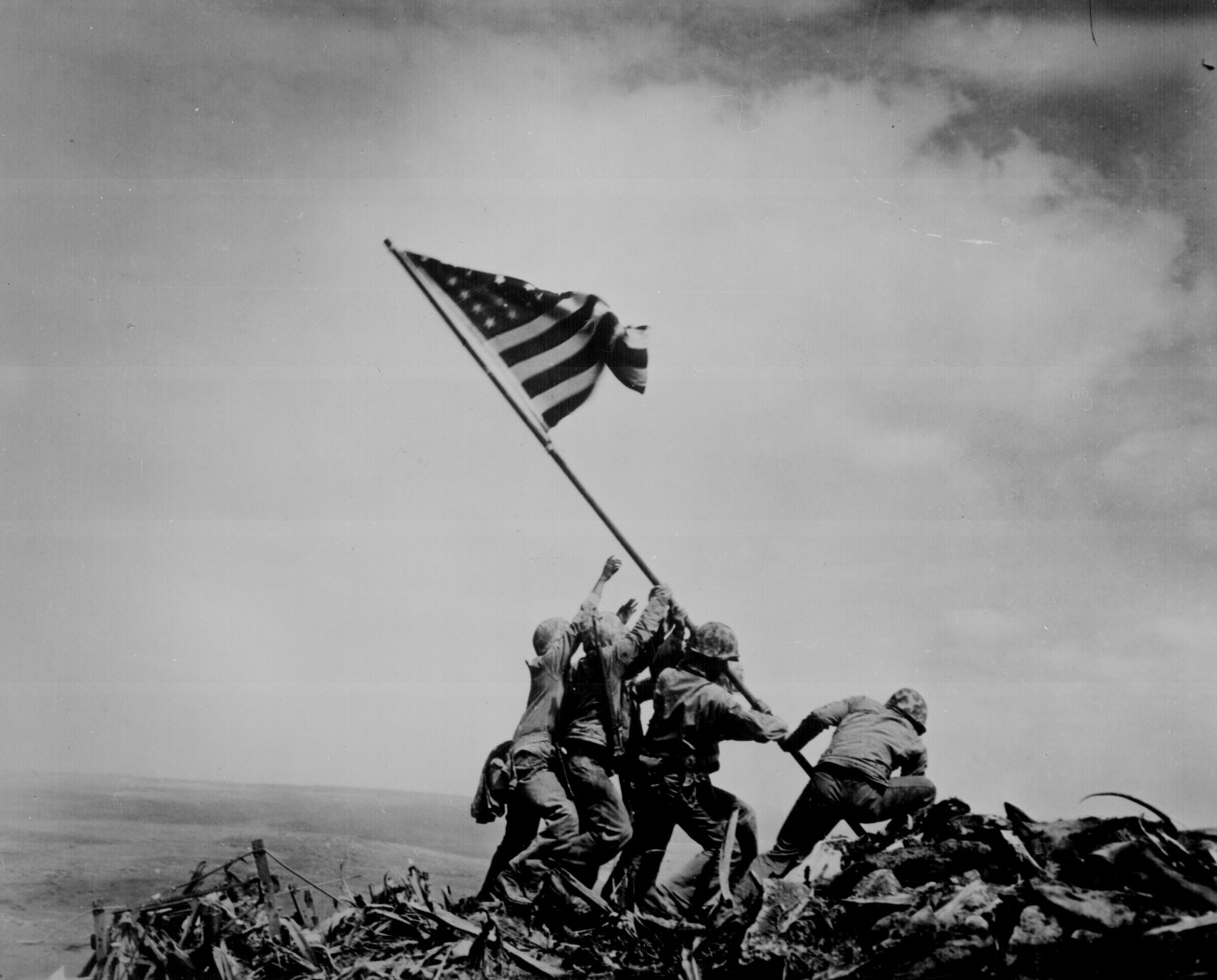
The
image became, among other things, a way to sell war bonds, a postage stamp, and
a bronze memorial in Washington, DC. It also inspired this photo by
Thomas Franklin of firemen at Ground Zero, which also became an iconic image of
9/11:

Choose
one of the iconic photographs below to research (or find your own):
–
Kevin Carter - Vulture Stalking a Child
--
Richard Drew – The Falling Man
--
Huynh Cong Ut – Napalm Strike
--
Dorothea Lange - Migrant Mother
--John
Filo - Kent State Massacre
--
Mike Wells - Famine in Karamoja
--
Lewis Hine - Breaker Boys
--
Photographer Unknown - 1968 Olympics Black Power salute
--
Edmund Hillary - Tenzing on Summit
--
Françoise Demulder - Palestinian Woman Pleads with Soldier
--
Alfred Eisenstaedt - V-J Day
--
Eddie Adams - Execution of a Viet Cong Guerrilla
--
Malcolm Browne - Burning Monk
--
Stuart Franklin -- Tank Man of Tiananmen Square
--
Photographer Unknown -- Hooded Man in Abu Ghraib
After
conducting some research, post a link to the
photo, along with the photographer's name (if known), and answer the
following questions:
What
year was it taken?
What
event was it depicting?
How
did people react to its publication?
How
does the photographer feel about capturing the image/ sharing it with the
public?
Why
do you think this image has become iconic?

Lewis Hine - Breaker Boys
ReplyDeletelink:http://research.archives.gov/description/523384
1.The photo was taken on January 16, 1911.
2. It was taken for the National Child Labor Committee.
3. Doesn't say what people thought of it at the time, it was probably normal for them. But today, a lot of people would be shocked that children are worked in dangerous mines.
4. The photographer wanted to show people how children are raised in dangerous environments. So that people are aware that it's not safe and they should be living better lives.
5. I think this image has become iconic because we are so used to little boys playing video games, going to school, or playing with Legos. But seeing that they look like men in a little boys body throws you off because children shouldn't be doing such hard work. The image captures the difficult times that these boys lived through.
Dorothea Lange - Migrant mother
ReplyDeletelink: graphics8.nytimes.com/images/2009/10/25/books/oshinsky-500.jpg
1. This photo was taken sometime in 1936
2. This legendary photograph was taken after the woman's car broke down at a shanty town on her family's way across the country in search of work during the great depression
3. The photo was so powerful that it was published the very next day in the San Francisco News. It was so powerful that the particular "pea-picker's" camp recieved 20,000 lbs of food within days of it being published.
4. Lange is extremely fond of the deep sense of sadness and worry in this photo, and really of the time. She writes "There she sat in that lean- to tent with her children huddled around her, and seemed to know that my pictures might help her, and so she helped me. There was a sort of equality about it." and I think this is really important because she seems to have known from the beginning that this was going to be a photo that would really portray this really ugly side of society at the time, that many people would have rather ignored.
5. I think this image has become so iconic because of how it truly represents the troubles of far too many Americans during the Great Depression. The woman's face shows a worry, not for herself, but of the children she holds in her little lean to tent. I feel like this is an image that made a lot of people really take a second look at all they had, even though it probably wasn't much, because at least they could feed their own kids, and that deep emotional impact is really what burns that image into our collective memory.
Stuart Franklin -- Tank Man of Tiananmen Square
ReplyDeleteLink: http://www.guardian.co.uk/artanddesign/2009/may/14/stuart-franklin-best-shot-photography
1. Taken June 5th, 1989.
2. An unknown man blocked a brigade of tanks going down the street near Tiananmen Square the morning after the Chinese military forcibly removed protesters in and around Tiananmen Square.
3. Internationally, the image of this man blocking the tank's path symbolizes the events at Tiananmen Square in 1989. It is also widely considered the most iconic picture of the 20th century.
4. The photographer wanted to publish his picture to show the world what happened in China that day, but due to strict Chinese censorship laws, a French student had to smuggle it out of the country in a box of tea. However, in China, many people are seemingly unaware that this event ever took place.
5. This image is iconic because it shows a man in a communist nation standing up the government, doing what he felt was right for the people of his country.
Alfred Eisenstaedt - V-J Day
ReplyDeleteLink: http://www.vpphotogallery.com/photog_eisen_vjday.htm
1. Taken August 14, 1945
2. At the time Alfred was walking around Times Square getting pictures for Life Magazine when he saw a sailor walking around kissing every woman he saw. When he came Alfred's way a nurse was walking by and he snapped the shot and the historic picture was made!
3. The "VJ Day in Times Square" photo was a hit in the photography world and he soon became known as the father of photojournalism. To this day it is still widely known and loved.
4. At the time Alfred was a photographer for Life Magazine and was used in an article.
5. I think the image is iconic because it shows all the amazing emotions that were happening that day when all the soldiers were coming home after the victory of the war. It was a true happy ending to a long period of struggle.
I Chose: Malcolm Browne- Burning Monk
ReplyDeleteLink: http://www.lyfe.freeserve.co.uk/photobrowne.htm
1.What year was it taken?
June 10, 1963
2.What event was it depicting?
The Repression of Buddhism by Diem in South Vietnam
3.How did people react to its publication?
It created an emotional response by both other countries and within its own. Which lead to the hastening of the end of the war.
4.How does the photographer feel about capturing the image/ sharing it with the public?
At first, i think there was hesitation in displaying such a 'horrifying' and disturbing image. Because despite the photographers association with the newspaper they did not rush to print. However The photographer does reference the fact that he felt 'capturing the event' was more important to future events then rushing to help assist/prevent what was happening... This is both a disturbing statement to me and one that as photographers going into the world of journalism must consider.
5.Why do you think this image has become iconic?
The stunning contradiction of a calm man being burned is disturbing to viewers. It is a Milestone in what affected the war at that time and what the 'turning point' may have been.
Photographer Unknown - 1968 Olympics Black Power Salute
ReplyDeletehttp://photos.newhavenregister.com/2012/10/16/photos-on-this-day-october-16-1968-1968-olympics-black-power-salute/
1. It was taken in 1968
2. This picture was taken after Tommie Smith won the 200 meter race, and John Carlos came in 3rd at the 1968 Summer olympics in Mexico.
3. Everyone saw it as a protest and was on the front page of newspapers all around the world.
4. The photographer was just taking a picture of the top three from the race, which ended up being an iconic picture.
5. I think this image became iconic because black poverty was a big part of life back in that time and they were protesting.
This comment has been removed by the author.
ReplyDeleteW. Eugene Smith - "Dewey Defeats Truman"
ReplyDeletehttp://iconicphotos.files.wordpress.com/2009/04/09362889-2604-455b-8c26-25ceb4b26903.jpg?w=700
1) It was taken November 4, 1948
2) This picture was taken two days after the 1948 presedential election, after President Harry S. Truman won his election (he was sworn into office in 1945 after Franklin D. Roosevelt's death). This depicts Truman holding up a two day-old copy of the Chicago Tribune with the headline "Dewey defeats Truman" in St. Louis, Missouri. Truman shows delight in showing off the Tribune's infamous error of declaring victory in favor of Truman's political opponent, then New York Governor Thomas E. Dewey.
3) Though the gaffe in part by the Tribune has caused President Truman's iconic triumph of holding up the publication, it has shown the mutual low opinion between Truman and the newspaper publication. The ways media polls for popularity of presidential candidates has changed since then, and covers even through the election process.
4)The photographer took the iconic picture of Truman triumphantly holding up the newspaper to show that sometimes the news can make mistakes.
5)I think this image is iconic, because it shows that even print media back in that time can be prone to making drastic mistakes.
1968 Olympics Black Power salute
ReplyDeletehttp://www.probell.com/photo_exhibit/Black%20Power%20Olympic%20Salute%20(1968).jpg
What year was it taken?
1968
What event was it depicting?
This salute wasn't necessarily a "black power salute" but more of a salute for human rights.
How did people react to its publication?
Smith and Carlos were largely ostracized by the U.S. sporting establishment in the following years and, in addition, were subject to criticism of their actions. Time magazine showed the five-ring Olympic logo with the words, "Angrier, Nastier, Uglier", instead of "Faster, Higher, Stronger". Back home, they were subject to abuse and they and their families received death threats.
How does the photographer feel about capturing the image/ sharing it with the public?
unknown photographer
Why do you think this image has become iconic?
This was a time that blacks were revolting and standing up for themselves. This was a symbol for black pride and a stand for black poverty, the slaves, and workers. Smith and Carlos stood up for their rights and are proud to be black. This simple silent gesture started an entire movement and brought hope to all black across America.
Amanda Robertson
ReplyDelete1. The Falling Man was taken by Richard Drew
http://www.esquire.com/features/ESQ0903-SEP_FALLINGMAN
2.The Photo was taken on September 11, 2001
3. The even that was happening at the time was 9/11
4. People were shocked when they saw this photo in the newspaper. People thought that Drew had exploited the death of the falling man and were extremely unhappy about the photo in general. \\
5. Richard Drew was actually on another photo shoot when the towers began to fall. He left his site because he knew that this was much more important than the task on hand.
6. I feel that this photo is iconic because it took place during such a horrific even. Everyone knows where they were on September 11th and everyone in the country was affected by it.
What year was it taken?
ReplyDelete1951 - Einstein with his tongue out
http://www.pbase.com/omoses/image/118045032
What event was it depicting?
This photograph was taken on Einstein's 72nd Birthday by Arthur Sasse. He was tired of smiling for the press that was harassing him throughout the party so when he was asked to smile in this picture, he stuck out his tongue instead.
How did people react to its publication?
Sasse's editors were somewhat displeased with the photograph at first because he assumed it would get a bad reaction from readers for being "inappropriate." However, it was published in the International News Photos Network.
How does the photographer feel about capturing the image/ sharing it with the public?
He wanted it published because he knew that he was the only one of the photographer's that night that got that unique shot.
Why do you think this image has become iconic?
It shows that Einstein was not only known for his intelligence but also for his personality and it shed new light on his character.
Malcolm Browne- Burning Monk
ReplyDeletehttp://lightbox.time.com/2012/08/28/malcolm-browne-the-story-behind-the-burning-monk/#6
1963
1)The photo depicts Buddhists monks and nuns Protesting for religious equality outside of the Cambodian Embassy in Saigon.
2)People were obviously shocked by the content of the image. Seeing a person willing to sacrifice themselves for something they believe in is one of the biggest eye openers.
3)Browne was less concerned about the actual event and more focused on getting his exposures right. He knew he'd have to find a way to get the images to the AP. But at the time it was difficult to do so quickly. Browne himself didn't even know that AP had chosen his photos to spread.
4)This photo is iconic mainly due to its unusual content but also because of the contrast between the wild flames and the monk kept calm by his strong faith.